Cleanrooms · · 6 min read
Cleanrooms and white rooms: what they are and how to choose equipment
What cleanrooms (also known as white rooms) are, how they are classified under ISO 14644 and what to consider when choosing equipment for healthcare, scientific and industrial processes.
Cleanrooms, also known as white rooms, are spaces in which contamination by airborne particles is controlled. Depending on the process, temperature, humidity and pressure conditions are also defined. Both terms are commonly used to refer to this type of facility; there is no general difference based on one being more sterile than the other.[1]
Their industrial relevance arises when environmental contamination can compromise a product, a sample or an assembly. The facility must respond to what is done inside it: what material is handled, where it is exposed and what conditions it needs to maintain.
A cleanroom is defined by verifiable conditions
The ISO 14644-1 standard classifies air cleanliness according to the concentration of particles of defined sizes. A classification must therefore be read together with the particle size considered and the conditions under which it has been verified. The appearance of the room or the presence of a filter does not replace that verification.[2]
An ISO class, on its own, does not demonstrate sterility or the absence of microorganisms. When the process requires microbiological control, this must be addressed specifically.
The same standard does not characterise whether particles are viable, nor their chemical or radiological nature.[2]
What ISO 5, ISO 7 and ISO 8 mean
As a reference for particles equal to or larger than 0.5 µm, these classes correspond to the following maximum concentrations:[2][3]
| Class | Maximum particles per m³ of size ≥ 0.5 µm |
|---|---|
| ISO 5 | 3,520 |
| ISO 7 | 352,000 |
| ISO 8 | 3,520,000 |
For the same particle size, a class with a lower number requires a lower concentration. The table alone does not constitute a complete classification: the occupancy state, the operating conditions and the applicable test method must be identified.
ISO classification and GMP grades
In the manufacture of sterile medicinal products, Annex 1 of the European Good Manufacturing Practice guidelines uses grades A, B, C and D and incorporates requirements for the process, microbiological control and operation. They are not complete equivalents of the ISO classes. In addition, the required conditions may differ between at-rest and in-operation states.[4]
For a laboratory, medical device or tissue bank project, it is advisable to first determine which requirements apply to the specific activity. Adopting a designation commonly used in another sector does not, by itself, justify that it is the right one.
Where they are used

In the pharmaceutical field, cleanrooms are part of the contamination control of sensitive processes. In tissue banks, regulations require the processing environment to be defined and controlled according to the operations performed and the exposure of the tissue.[4][5]
They are also used in scientific instrumentation, electronics and optics. The Institute of Astrophysics of Andalusia, for example, describes facilities intended for the testing and assembly of equipment that requires special cleanliness conditions. This example shows that the usefulness of a cleanroom extends beyond healthcare manufacturing.[1]
Air and working practices form a whole
To define a facility, it is advisable to review in a coordinated way the air treatment, the routes of people and materials, cleaning and interventions on equipment. An environmental condition must be maintainable during the intended activity, with the doors, loads and operations considered in the project.
The pressure and airflow strategy depends on the protection objective. Annex 1 provides for adjustments when certain hazardous materials need to be contained. For this reason, positive pressure should not be presented as a universal characteristic of every cleanroom.[4]
How to choose equipment for a cleanroom
The first question is how the equipment will behave within the intended environment. ISO 14644-14:2026 describes a methodology for assessing its suitability in terms of airborne particles. Its scope does not cover aspects such as biocontamination or ease of cleaning, which require their own assessment.[6]
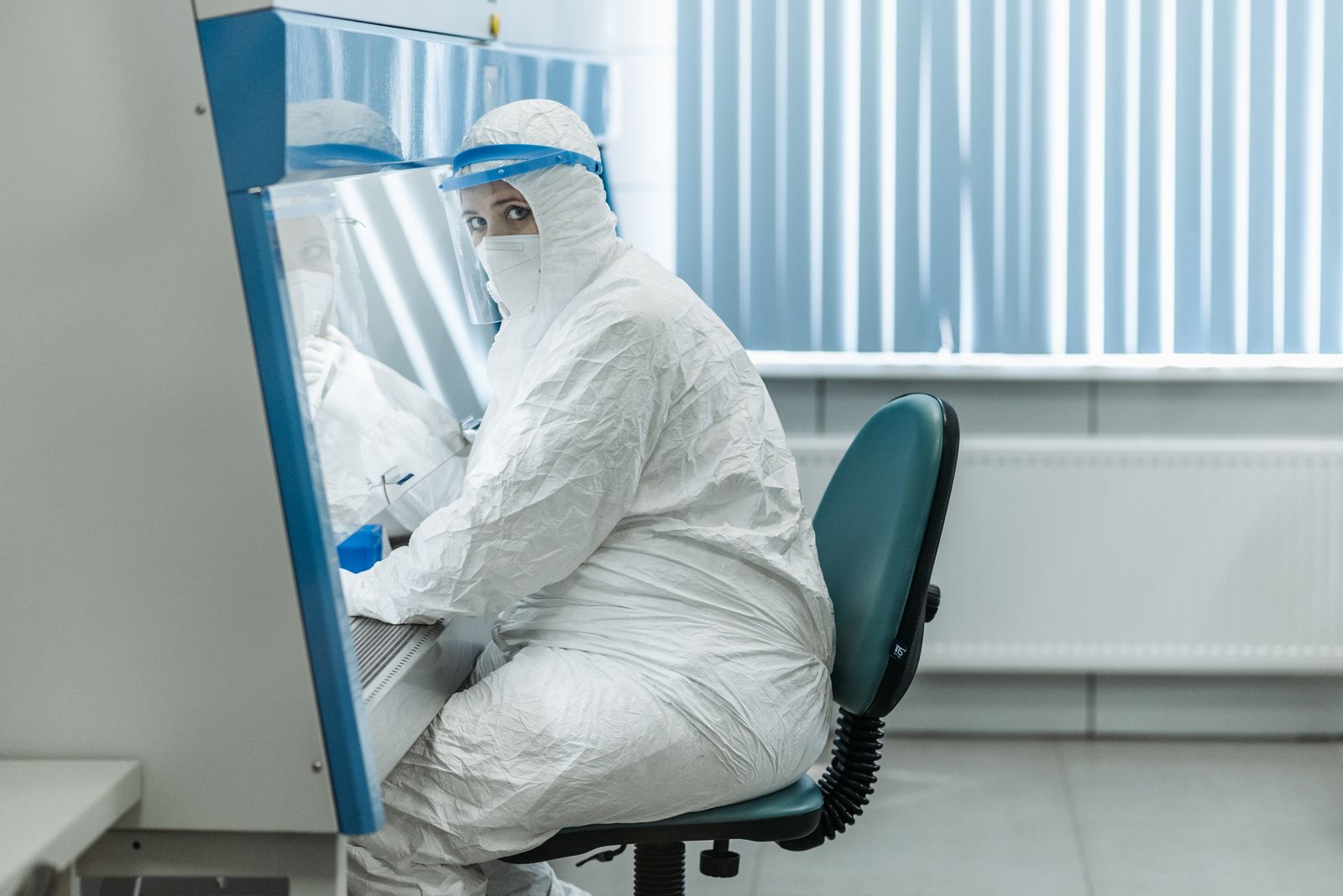
As project criteria, we recommend reviewing:
- Accessible surfaces and points where material can accumulate.
- Compatibility with cleaning agents.
- Access for maintenance.
- Which interventions can be carried out without compromising the working environment.
For thermal equipment, it is worth studying the heat released into the room, the connections and the loading and unloading operations. For equipment with moving parts, particle generation under real conditions of use must be assessed. These requirements should be agreed between the process owner, the quality team and the suppliers involved.
From room class to equipment requirement
A technical enquiry should provide the process, the required class and state, the material handled, the location and the planned cleaning procedures. On that basis, it is possible to define what documentation and checks the equipment needs and to study its integration into the facility.
Contact Selecta Engineering to study the requirements of equipment intended for your cleanroom.
Enquire about cleanroom equipment
Sources
- Institute of Astrophysics of Andalusia (CSIC) — Cleanrooms and applications in optics and electronics
- ISO — ISO 14644 part 1, classification of air cleanliness by particle concentration
- FDA — Sterile Drug Products Produced by Aseptic Processing, table 1 of ISO classes
- European Commission — EU GMP Annex 1, manufacture of sterile medicinal products
- BOE — Royal Decree-Law 9/2014, tissue processing conditions
- ISO — ISO 14644 part 14, 2026 edition, equipment suitability by particle concentration