Tissue banks · · 7 min read
Bone powder in tissue banks: uses, microns, value and price
What bone powder is used for, what its micron size indicates and how tissue banks prepare it. Includes 2026 Spanish public reference prices.
The bone powder used by a tissue bank is a preparation that can serve as a graft in certain bone repair and reconstruction procedures. Its value depends on the origin of the tissue, the treatment it has received, its particle size and the indication of the product. A small container holds far more than a grinding operation: it embodies selection, processing, controls and traceability.
What is meant by bone powder
When it comes from a human donor and is intended for another person, we are talking about an allograft. One specific presentation is freeze-dried mineralised cortical bone powder: cortical tissue reduced to particles that retains its mineral component. The Banc de Sang i Teixits offers it in different volumes and size ranges.[1]
Demineralised bone matrix, or DBM, is a different preparation. It is obtained by removing the mineral component from bone and can be supplied as a powder or in mouldable formulations. NHS Blood and Transplant, for example, describes DBM presentations as paste and putty. Origin and composition should accompany any comparison.[2]
There are also synthetic bone substitutes, such as calcium phosphate-based ones. For this reason, before comparing one product with another, it is advisable to identify what material each one contains. The commercial term bone graft does not mean that all options are human tissue or that they share the same properties.[3]
What it is used for
The BST data sheets consulted list applications of its cortical powders in:
- Alveolar ridge preservation and filling after a tooth extraction.
- Sinus lift.
- Bone defects.
- Maxillofacial reconstruction.
These are indications for identified products and should not be extrapolated to any particulate material.[1][4]
The clinical interest lies in having a preparation suited to the defect and the procedure. Some demineralised products are described as having osteoinductive potential, that is, a potential ability to promote bone formation. That characteristic does not allow an identical outcome to be promised in all patients or situations.[4]
What microns indicate
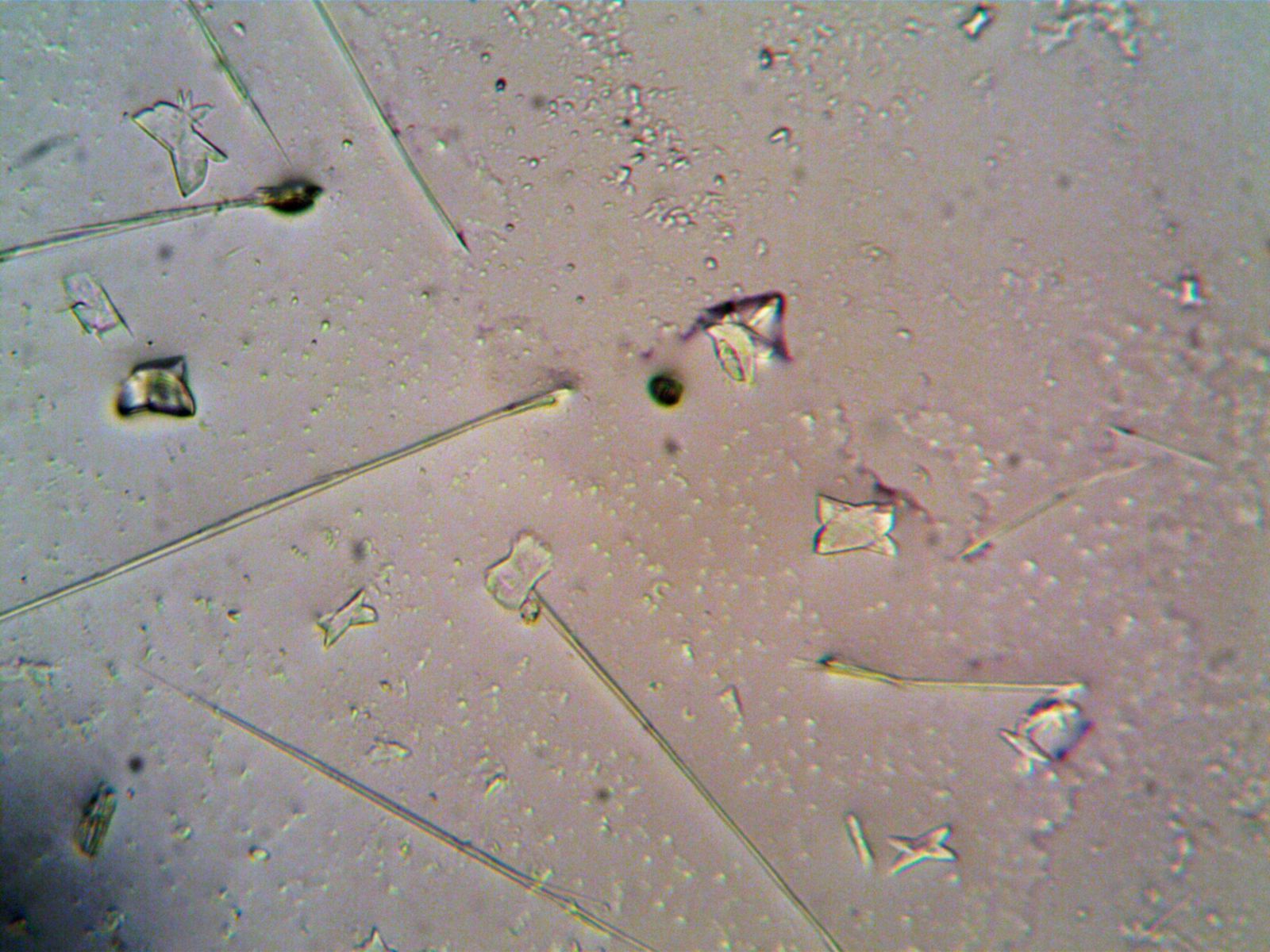
The micron or micrometre, whose symbol is µm, is a unit of length: 1,000 µm equal 1 mm. Thus, a range of 250–850 µm is equivalent to 0.25–0.85 mm. Although we speak of powder, these preparations may contain particles that would visually be described as small granules.
These are real examples of particle size declared in the BST data sheets:[1][4]
| Preparation | Particle size |
|---|---|
| Freeze-dried mineralised cortical | 250–850 µm, depending on reference |
| Freeze-dried mineralised cortical | 500–850 µm, depending on reference |
| Freeze-dried demineralised cortical | 250–850 µm |
The data sheet describes a range, not that all particles measure exactly the same. For a tissue bank, the aim is to obtain and verify the specified distribution reproducibly. The choice of a size for clinical use must correspond to the product and the indication.
A finer particle does not guarantee a better result
A small human study by Fucini and colleagues compared demineralised allograft of 250–500 µm with another of 850–1,000 µm in periodontal defects, without detecting a statistically significant difference in bone fill. It is an old and limited study; it does not demonstrate universal equivalence, but neither does it support the idea that always reducing size improves the result.[5]
From an engineering standpoint, the recommended goal is to achieve a justified specification and control its variability. Maximum fineness, taken in isolation, provides little information about the final usefulness of the graft.
What a tissue bank contributes
The added value includes evaluating the donor, maintaining tissue identification, controlling processing and preservation, carrying out the planned controls and ensuring storage and distribution. Spanish regulations require controlled conditions and validation of critical processes. These activities make it possible to link the tissue supplied with its origin and with the documentation of its preparation.[6]
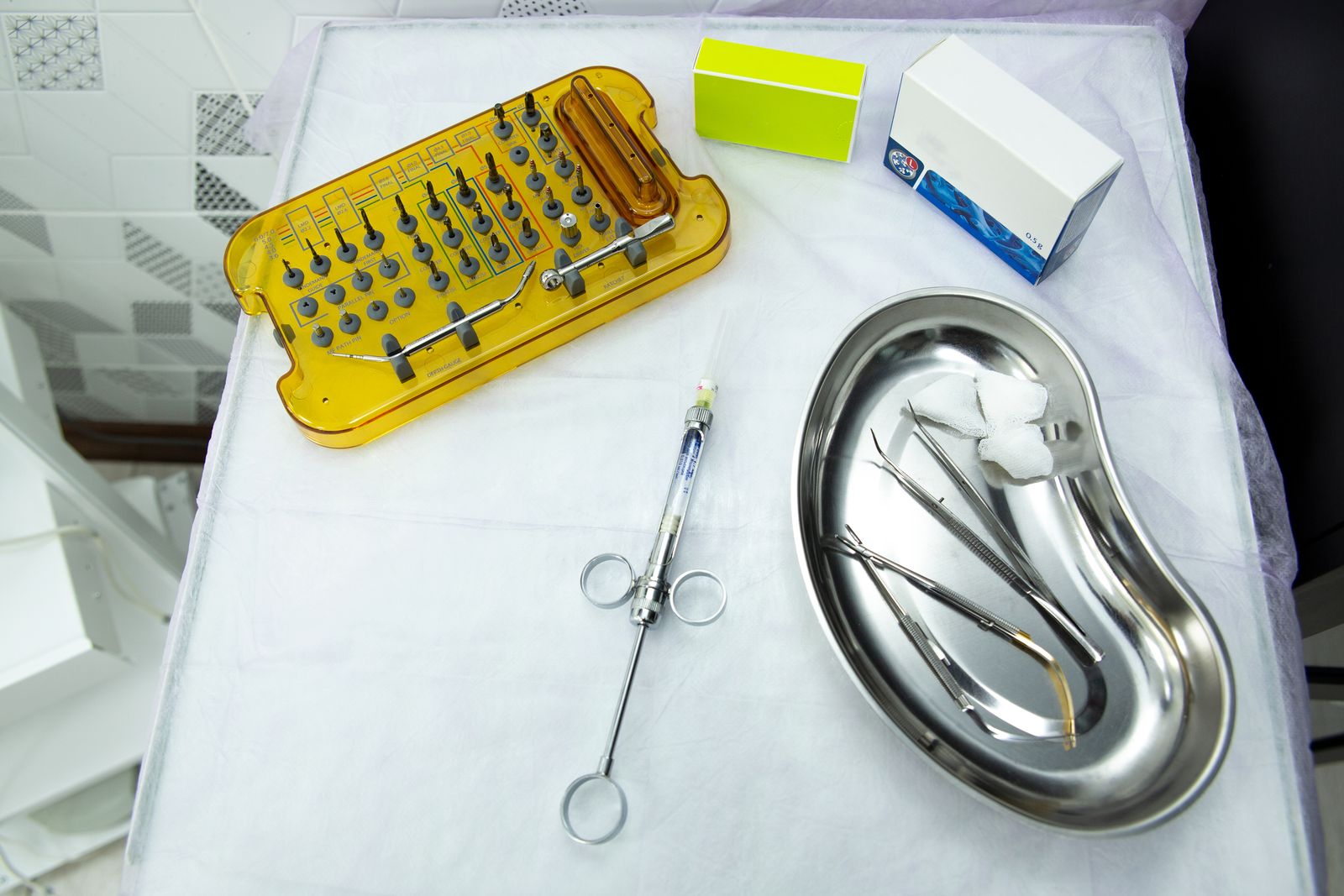
For equipment, we propose translating those needs into verifiable requirements: repeatable behaviour, compatible materials, access for cleaning, control of the relevant parameters and documentation that facilitates process qualification and validation. The bank must determine which of these are necessary for its activity.
Public reference prices in Spain
The standard tariff of the Banc de Sang i Teixits in force since 1 January 2026 publishes the following amounts. It was consulted on 17 October 2026:[7]
| Code | Product | Presentation | Published retail price |
|---|---|---|---|
| BT1002 | Mineralised cortical powder 250–850 µm | 1 cc | €89.34 |
| BT1003 | Demineralised cortical powder | 1 cc | €114.85 |
| BT1012 | Demineralised bone matrix putty | 1 cc | €154.93 |
These are prices for those specific references, not an average market price or a quotation from Selecta Engineering.
One cc equals one millilitre of volume; it is not automatically equivalent to one gram. Nor should it be assumed that 1 cc of powder and 1 cc of a mouldable formulation contain the same amount of tissue. For an actual supply, the applicable conditions must be confirmed, including additional delivery charges.
What the economic value represents
In Spain, tissue donation is voluntary and altruistic. The activities of tissue establishments are not-for-profit and may only pass on the actual costs of authorised services. The BST explains that its prices reflect procurement, validation, processing and storage, among other activities.[6][8]
The industrial reading of these amounts is that a clinical preparation brings together many operations and controls. The tariff alone does not allow the bank's margin or the profitability of a machine to be calculated. To assess a piece of equipment, it is worth studying how much it contributes to meeting the product specification, documenting the process and making proper use of the available tissue.
If you are defining equipment for a tissue bank process, share your requirements with Selecta Engineering so we can study their technical feasibility.
Discuss equipment requirements
Sources
- BST — Freeze-dried mineralised cortical bone powder, technical data sheet
- NHS Blood and Transplant — Demineralised bone matrix
- Straumann — BoneCeramic, example of a synthetic bone substitute
- BST — Freeze-dried demineralised cortical bone powder, technical data sheet
- Fucini and colleagues — Human study on particle size, Journal of Periodontology, 1993
- BOE — Royal Decree-Law 9/2014, articles 3 and 19 and annex I
- BST — Standard tissue tariff 2026, pages 4 and 5
- BST — Explanation of its tariffs and cost recovery