ATEX · · 6 min read
Chemical drying at 80 °C in ATEX environments in the defence sector
Discover the applications that 80 °C drying can have in auxiliary defence processes and what needs to be checked when explosive atmospheres are present.
Chemical drying at 80 °C can be of interest in auxiliary processes in the defence sector when moisture or volatile components need to be removed from materials compatible with that temperature. Its usefulness depends on the product, its initial condition and the result that needs to be achieved. The same thermal setpoint can serve to study very different applications, but it does not, on its own, make it possible to choose a piece of equipment.
If flammable substances that can mix with air are released during the process, the risk of an explosive atmosphere must also be assessed. This can happen, for example, with solvents present in paints, adhesives or cleaning products. ATEX refers to that risk and its protection framework; it is not a property that makes any substance or any drying process safe.[1]
Possible applications in auxiliary processes
The following are possible applications to be studied with the person responsible for the process and with the technical data sheets of the materials. They do not constitute a validated manufacturing cycle or a universal recommendation to work at 80 °C.
Drying components after cleaning
Housings, brackets and auxiliary parts may require a drying stage before inspection, assembly or packaging. The objective must be specified: removing surface water, reaching a moisture limit or reducing an acceptable residue. If cleaning has been aqueous and no relevant flammable substances are present, the act of drying does not automatically make the process an ATEX process.
Treatment of compatible coatings
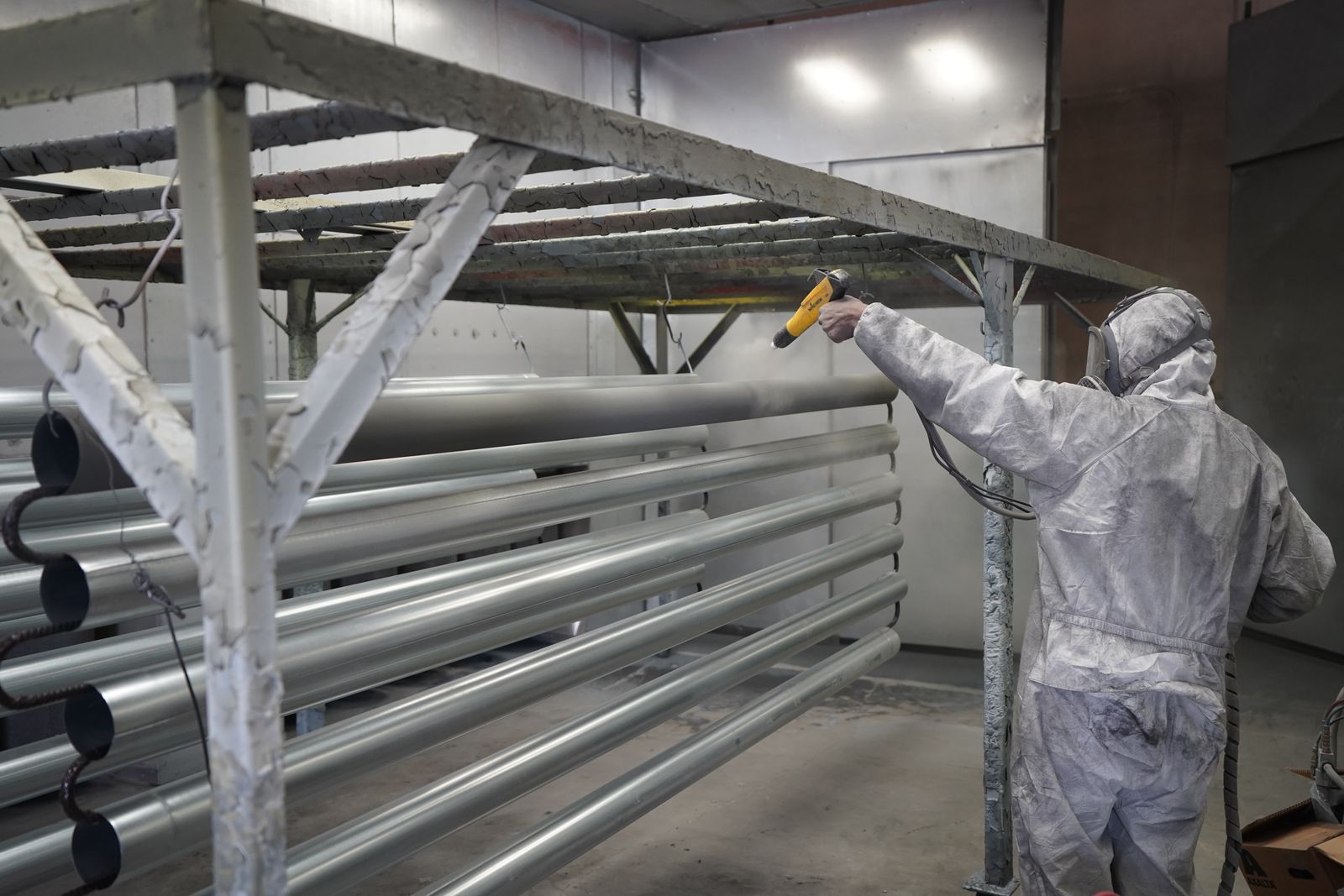
Drying coatings and resins is a documented industrial application of ovens designed for processes that release solvents. Its possible use on auxiliary defence components requires checking the coating data sheet, the substrate and the required finish. Drying and curing are not interchangeable either: removing a solvent does not prove that the curing reaction has been completed.[2]
Testing and process development
A laboratory can study whether a thermal stage helps obtain reproducible results on samples or non-energetic components. In that context, it is important to define what will be measured before and after treatment: residual moisture, appearance, mass or a functional property. These tests make it possible to decide whether drying adds value and what requirements a future installation must meet.
What working at 80 degrees means
80 °C represents a process setpoint. It does not necessarily describe the actual temperature of all the parts, nor that of every point in the chamber, nor the maximum surface temperature of the equipment. The load, its arrangement and the thermal behaviour of the whole assembly must be taken into account when verifying the result.
The temperature class of the ATEX marking relates to surface temperature limits and conditions of use. Therefore, an 80 °C setpoint does not allow a T6 marking, or compatibility with a specific substance, to be inferred. That compatibility must be supported by the assessment of the equipment, its documentation and the intended use.[3]
The chamber interior and the room require their own assessment
A chamber may contain a process that generates a hazardous atmosphere even if it is located in a room without a classified zone. It may also be the case that the external environment imposes additional requirements. The European Commission's ATEX guide distinguishes between these situations and the connections between equipment; the scope applicable to the assembly and its components must be determined for the actual configuration.[4]
The specific scope of energetic materials
Explosives and chemically unstable substances have specific requirements. Royal Decree 681/2003 excludes certain activities involving these materials from its scope, and Royal Decree 144/2016 provides for an exclusion when the hazard arises exclusively from them.[5][6]
An ATEX declaration does not, on its own, authorise the drying of ammunition, propellants or explosive compositions.
How to approach a project with Selecta Engineering
A useful enquiry starts with the material and the expected result. It is advisable to provide its technical documentation, geometry, production needs, acceptance criteria and installation conditions. With that information, the feasibility of the equipment can be studied and the required performance and checks can be defined. Temperature thus becomes a justified requirement within a complete process.
Contact Selecta Engineering to study the requirements of your industrial drying project.
Discuss an industrial drying project
Sources
- HSE — Fire and explosion: flammable substances and sources of risk
- Weiss Technik — Drying of coatings and resins with solvent release
- INSST — Technical guide on explosive atmospheres, appendix 4, 2021 edition
- European Commission — ATEX Guide, sixth edition of January 2026, sections 34 and 35
- BOE — Royal Decree 681/2003, article 1
- BOE — Royal Decree 144/2016, article 1, consolidated text consulted on 17 October 2026